
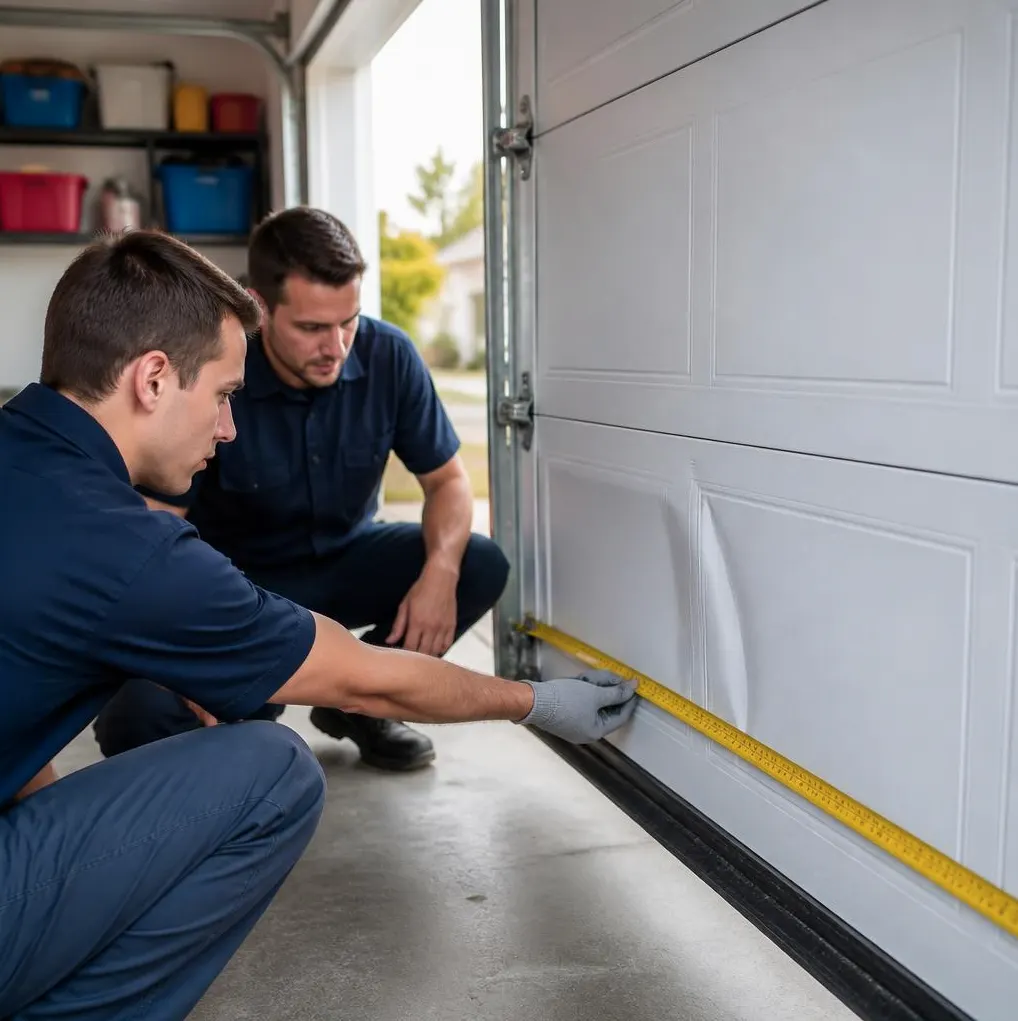
The Argument Happens at the Keypad
It usually goes like this: the door comes down, hits the floor, and bounces back up an inch before settling. Or it reverses halfway closed for no obvious reason. One of you says something's wrong, call someone. The other heads for the garage door opener, pops open the little plastic cover, and says I'll just turn up the force. Twenty minutes later you're both standing in the garage watching the door slam down harder than before, and now you're arguing about whether that's better or worse.
Here's the part neither of you may know: force and travel limits are two different settings, they fix two different problems, and turning up force to solve a travel or obstruction issue is how garage doors get damaged.
What Travel Limits Actually Control
Travel limits tell the opener exactly how far to move the door — where fully open stops and where fully closed stops. If the limit is set wrong, you get symptoms that look like a force problem but aren't:
- The door stops short of the floor, leaving a gap
- The door tries to keep pulling down after it's already closed, straining the opener
- The door doesn't open all the way, so it looks like it's struggling
Travel limits need to be reset any time the door itself changes — a new door, a repaired panel, or a door that's physically swelled or shifted. That last one matters here: humidity in this part of Florida causes wood and composite doors to expand during the wet season and contract again as things dry out. A travel limit set correctly in a dry spell can be slightly off after weeks of afternoon downpours, because the door's actual stopping point has moved, even if the opener hasn't changed at all.
What Force Actually Controls
Force is how much power the motor uses to push or pull the door along its travel. It should be set to the minimum amount needed to move the door smoothly — not the amount needed to force it through resistance. When the force setting is too high, the opener will push the door through problems instead of stopping for them: a binding roller, a track that's slightly out of alignment, a spring that's lost tension. The opener just muscles through it.
That's the real danger. Garage door openers aren't supposed to overpower obstructions — they're supposed to stop and reverse. Federal safety standards require it. When force is cranked too high:
- The auto-reverse safety feature stops working the way it should, because the door doesn't recognize resistance as a stop signal anymore
- Cables and rollers wear out faster from constant strain
- Torsion springs lose tension sooner because they're fighting the motor instead of balancing it
- Tracks bend or pull away from the wall over time
In other words, high force doesn't fix a sticking door. It just hides the sticking door's symptoms while quietly wearing out everything around it.
A Quick Way to Tell Which One You Have
Disconnect the opener and lift the door by hand (carefully, with the release cord). A properly balanced door should move smoothly and stay roughly in place when you let go partway. If it's heavy, uneven, or drops on its own, that's a spring or balance issue — not something either setting should be covering for. If the door moves fine by hand but still reverses or struggles with the opener running, that points to a travel limit or sensor alignment problem.
When It's Time to Call Us
If you've checked the balance and the door still reverses, bounces, or won't fully close, stop adjusting dials and call Bryceville Garage Door Pro. We recalibrate opener force and travel settings properly, test the auto-reverse safety function, and check for the underlying cause — whether that's a binding roller, a misaligned track, rust from salt air, or a spring that's due for replacement. If your opener is older or was never programmed correctly after a door swap, our Garage Door Opener Installation service includes full calibration so the settings actually match your door. And if it's been a while since anyone's looked at the rollers, cables, or hardware, our Garage Door Maintenance & Tune-Up catches the small issues before they turn into a door that needs the opener to compensate for them.
Settle the argument the right way — call Bryceville Garage Door Pro and get your opener's force and travel limits set correctly the first time.