
Rule of thumb: if your garage door opens, closes, and seals evenly right now, a short once-over before the first cold front is really all the winter prep you need. The exceptions are the parts that quietly took a beating during hurricane season and humid summer months — those won't show symptoms until a cold snap or a sudden temperature swing finds the weak spot.
Why Bryceville Winters Still Matter for Garage Doors
Winter here isn't brutal, but it's not nothing either. Nights can dip into the 30s and 40s while afternoons still climb back into the 60s and 70s, and that daily swing causes metal components to expand and contract more than people expect. Add in leftover humidity from the warm months, salt-laden air drifting in from the coastal communities like Fernandina Beach and Yulee, and the tail end of hurricane season running through the end of November, and you've got a stretch where small issues get worse fast if they're ignored.
Check Weatherstripping and Seals First
Rubber seals along the bottom and sides of the door take the brunt of Florida's humidity. Over a hot, wet summer, they can swell, crack, or pull away from the track. As temperatures drop at night, that same rubber stiffens and shrinks slightly, which is often when gaps become obvious.
- Run a hand along the bottom seal — if it's stiff, cracked, or doesn't sit flush against the floor, it needs replacing before cold mornings set in.
- Check side seals for daylight gaps, especially on doors that faced direct sun all summer.
- Look for water staining on the garage floor near the door edges, a sign moisture has been getting past the seal during afternoon downpours.
Inspect Hardware for Rust and Corrosion
Salt air doesn't stay confined to the immediate coastline — it travels further inland than most homeowners realize, and combined with summer humidity, it accelerates rust on springs, hinges, and roller brackets. Cooler, drier winter air is actually a good time to catch this before it worsens.
- Look closely at the springs for orange or flaking rust, especially near the coils where tension is highest.
- Check hinges and the track mounting brackets for surface rust that could weaken fasteners over time.
- Wipe down metal components with a dry cloth and apply a light coat of garage-door-rated lubricant to slow further corrosion.
Lubricate Before the Temperature Swings Get Worse
Moisture from a humid fall can leave rollers and hinges gummed up or starting to stick. As it gets cooler, any lubricant that's broken down won't protect as well, and metal parts rubbing against each other in cold, dry air tend to squeak or bind.
- Lubricate rollers, hinges, and the torsion spring with a silicone or lithium-based garage door lubricant — avoid WD-40 as a long-term lubricant since it attracts dust.
- Wipe excess off the tracks themselves; lubricant on the tracks attracts grit rather than helping the door glide.
Test the Opener and Safety Sensors
Condensation is common on cooler mornings after a humid night, and it can briefly fog up photo-eye safety sensors or cause minor electrical hiccups in older openers.
- Wipe both safety sensor lenses clean and make sure they're aligned — a blinking indicator light usually means they're not reading each other correctly.
- Test the auto-reverse function by placing a piece of wood in the door's path; it should reverse immediately on contact.
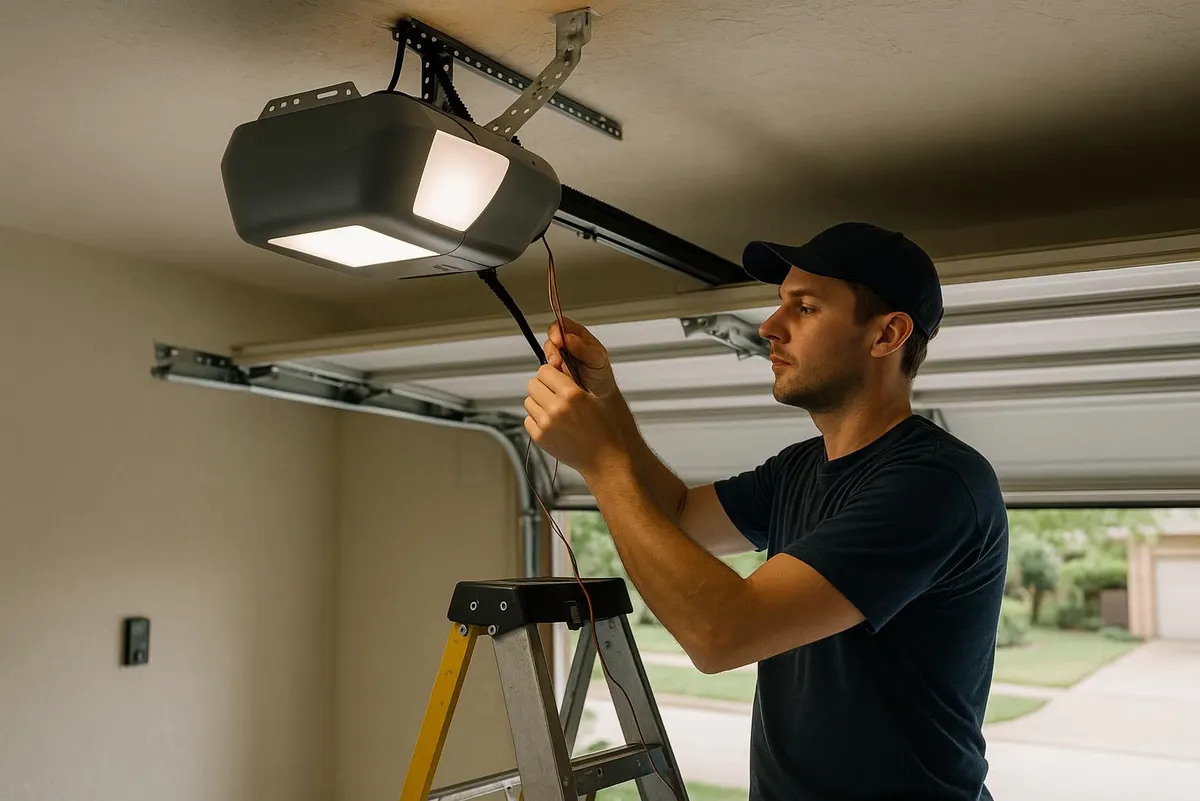
- Listen for new grinding or straining noises from the opener motor, which can indicate the chain or belt has loosened as temperatures shifted.
Don't Skip the Wind-Load Check
Hurricane season technically runs through the end of November, so there's often overlap between storm risk and the first cool fronts. If your door took wind pressure or flying debris impact during the season, even minor dents or bent track sections can compromise how it performs under future wind-load stress. This is worth checking now, before it's forgotten until next summer.
When to Call Bryceville Garage Door Pro
If you're seeing rust creeping past the surface, a spring that looks stretched or discolored, or a door that hesitates or grinds when it opens, it's time to have it looked at rather than waiting. Our team handles Garage Door Maintenance & Tune-Up visits that cover lubrication, hardware inspection, and seal replacement in one trip, and we also handle Cable & Roller Replacement when corrosion or wear has gone past the point of a simple adjustment. Catching these issues now means you're not dealing with a stuck or failed door during the next cold snap or storm.
If your garage door needs a seasonal check or repair before winter settles in, call Bryceville Garage Door Pro today — proudly serving Bryceville, FL and the surrounding Nassau County communities.